Saturday, August 29, 2015

Effective Planning Key to Achieving Zero Net Energy Buildings - Hillhouse Construction

Effective Planning Key to Achieving Zero Net Energy Buildings - Hillhouse Construction


Effective Planning Key to Achieving Zero Net Energy Buildings
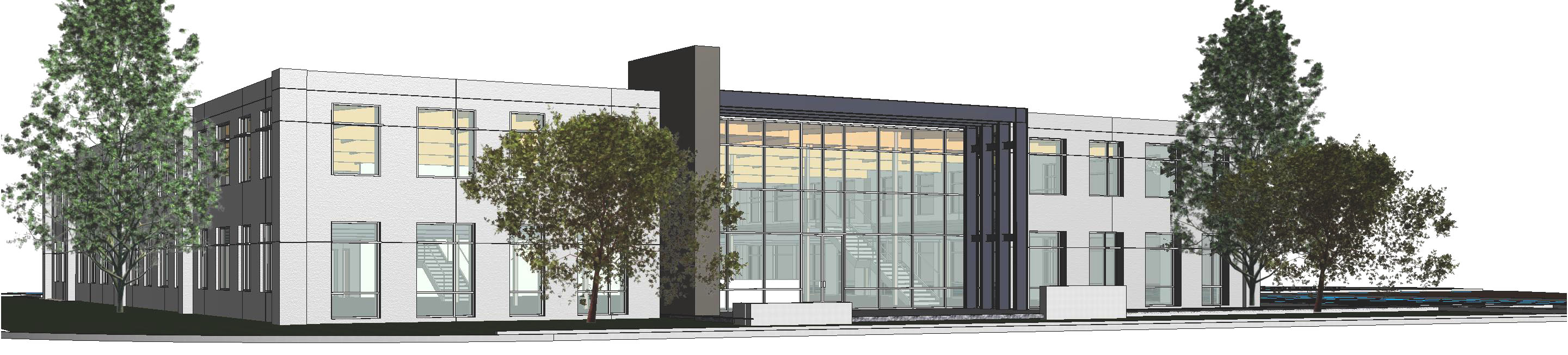
415 Mathilda There
are zero net energy buildings, and then there are signature, SageSpace
buildings. SageSpace and Hillhouse Construction Company are teaming up
once again to bring high-performance, zero net energy buildings to
market. We’d like to give you a glimpse into our planning process on 415
Mathilda, a project we started this past summer. We’re really excited
about it.

The California Energy Commission (CEC) set a goal to
bring 100% of all new commercial buildings to zero net energy (ZNE) by
2030 through energy efficiency retrofits and increased use of clean,
renewable energy generation. The construction industry is bustling in
Silicon Valley, but Hillhouse and SageSpace are leading the charge on
ZNE industry expansion and, when it’s done, 415 will be a showpiece for
the CEC zero net energy initiative.

Given Hillhouse’s portfolio of award-winning healthy buildings
and partnerships with industry leading teams at View Dynamic Glass and
Integral Group, the CEC awarded us a grant to build the 415 Mathilda
project and then share our building strategies and final results with
the rest of California.

Better Buildings Challenge Saves $840 Million in Energy Costs, Adds New Water Savings Goal | Department of Energy

Better Buildings Challenge Saves $840 Million in Energy Costs, Adds New Water Savings Goal | Department of Energy


Partners Continue to Lead in Efficiency, Reach New Levels of Energy Savings
WASHINGTON – As part of the Administration’s effort to advance energy
efficiency and combat the harmful effects of climate change, Better
Buildings Challenge partners have cut energy waste by 94 TBTUs since
President Obama first launched the challenge in 2011. The energy savings
announced today have saved partners a total of $840 million dollars in
energy costs and avoided 6 million tons of harmful carbon emissions,
equivalent to cutting the emissions of 1 million cars. To continue this
progress, the Energy Department is expanding the Better Buildings
Challenge to include water savings goals and Senior Advisor to the
President Brian Deese today called on existing partners to recruit one
new partner to join the program and set a goal of reducing energy use
across their respective building portfolios by at least 20 percent in
the next 10 years, effectively doubling down on Better Buildings.

California’s Net Zero Energy Building Mandate To Reshape US Construction Industry | CleanTechnica

California’s Net Zero Energy Building Mandate To Reshape US Construction Industry | CleanTechnica

 California’s recent revisions to Title 24 put in place ambitious
performance goals: all residential buildings must be Zero Net Energy
(ZNE) by 2020, and all commercial buildings must follow suit by 2030.
The code also applies to retrofit projects that pass certain thresholds.
(A ZNE building produces as much energy on-site as it consumes on an
annual basis.) These changes promise to reshape the construction
industry in significant ways — and not just in California. Here’s how.

 http://sefairauploads.s3.amazonaws.com/wp-content/uploads/2013/12/buildings_landscape.jpg

Electricity from biomass with carbon capture could make western U.S. carbon-negative | Berkeley News

Electricity from biomass with carbon capture could make western U.S. carbon-negative | Berkeley News

 enerating electricity from biomass, such as urban waste and
sustainably-sourced forest and crop residues, is one strategy for
reducing greenhouse gas emissions, because it is carbon-neutral: it
produces as much carbon as the plants suck out of the atmosphere.


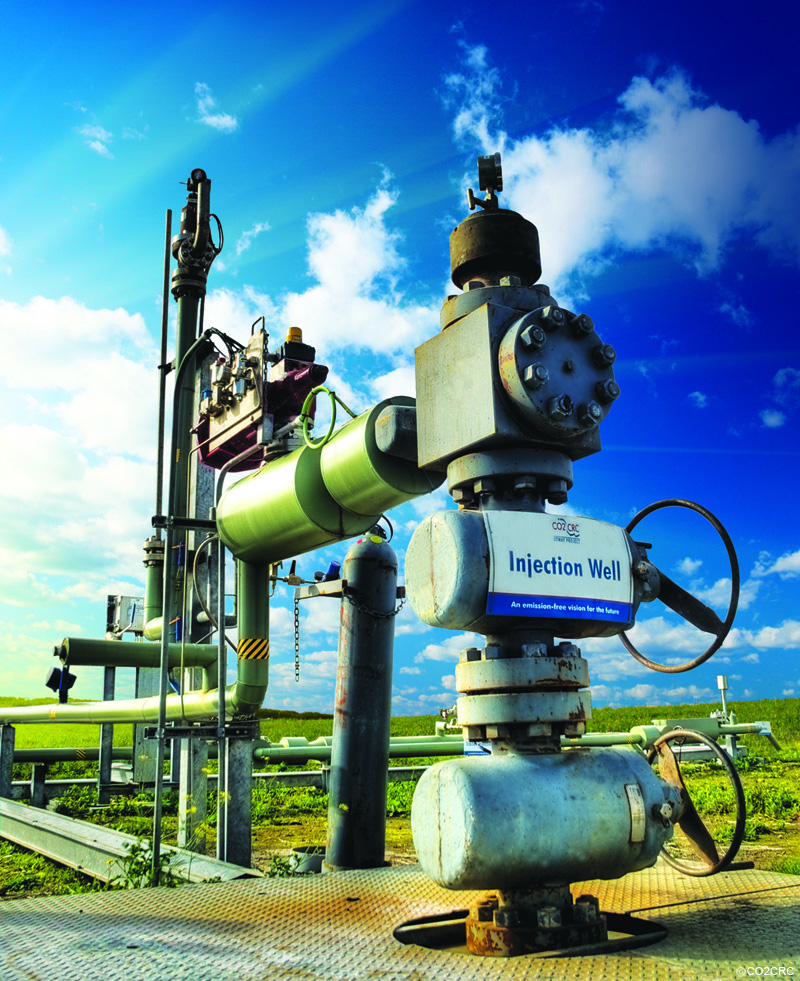
carbon dioxide injection well, Australia
A carbon dioxide injection well in Australia. (Photo courtesy of CO2CRC)
A new UC Berkeley study shows that if biomass electricity production
is combined with carbon capture and sequestration in the western United
States, power generators could actually store more carbon than they emit
and make a critical contribution to an overall zero-carbon future by
the second half of the 21st century.


By capturing carbon from burning biomass – termed bioenergy with
carbon capture and sequestration (BECCS) – power generators could become
carbon-negative even while retaining gas- or coal-burning plants with
carbon capture technology. The carbon reduction might even offset the
emissions from fossil fuel used in transportation, said study leader
Daniel Sanchez, a graduate student in UC Berkeley’s Energy and Resources
Group.


“There are a lot of commercial uncertainties about carbon capture and
sequestration technologies,” Sanchez admitted. “Nevertheless, we’re
taking this technology and showing that in the Western United States 35
years from now, BECCS doesn’t merely let you reduce emissions by 80
percent – the current 2050 goal in California – but gets the power
system to negative carbon emissions: you store more carbon than you
create.”


BECCS may be one of the few cost-effective carbon-negative
opportunities available to mitigate the worst effects of anthropogenic
climate change, said energy expert Daniel Kammen, who directed the
research. This strategy will be particularly important should climate
change be worse than anticipated, or emissions reductions in other
portions of the economy prove particularly difficult to achieve.

PCM for Energy Efficient Buildings

PCM for Energy Efficient Buildings


Phase Change Composite Materials for Energy Efficient Building Envelopes


Introduction

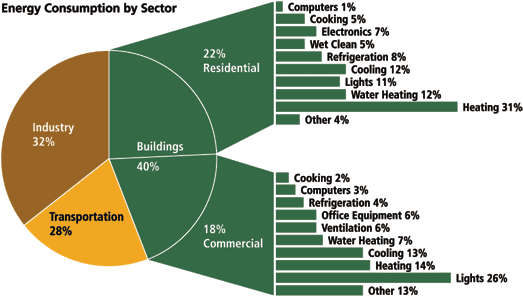
In 2009, building operation was responsible for
about 30% of greenhouse gas emission and accounted for about 40% of
primary energy consumption globally [1]. Furthermore, greenhouse gas
emission from the building sector is expected to grow in the next
decades as a result of rapid economic growth [2]. Similar statistics
hold for the United States. In 2011, building operation accounted for
about 40% of total US primary energy consumption with 46% consumed by
commercial and 54% by residential buildings [3]. About 30 and 43% of
this energy was consumed for space heating and air conditioning in
commercial and residential buildings, respectively [3]. Therefore,
reducing the energy required for heating and cooling would
substantially improve building energy efficiency. To curb the energy
consumption of the building sector, the 2008 California long term
energy efficiency strategic plan established two major goals: (1) all
new residential buildings should be zero net energy (ZNE) by 2020 and
(2) all new commercial buildings by 2030 [4]. The European Union
established similar goals: (1) new buildings owned and occupied by
public authorities will be “nearly ZNE” by 2018 and (2) all new
buildings will be “nearly ZNE” by 2020 [5].

Fusion with smaller scale

A team of researchers, building on work that began as a class project at the Massachusetts Institute of Technology, has published a design for an “ARC” demonstration-scale fusion energy power plant that could actually live up to the ambitious adjectives behind the acronym: “affordable, robust, compact.”

Michael Green: Why we should build wooden skyscrapers | TED Talk | TED.com

Michael Green: Why we should build wooden skyscrapers | TED Talk | TED.com

 http://www.ted.com/talks/michael_green_why_we_should_build_wooden_skyscrapers?language=en